Here's a breakdown:
* Hypotheses: A hypothesis is a proposed explanation for a phenomenon. It's a prediction or an educated guess about how something works.
* Testing: Scientists design experiments or observations to gather evidence that either supports or refutes their hypothesis.
Examples of what scientists test:
* The effectiveness of a new drug: Does it work? Is it safe?
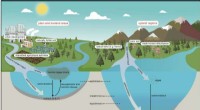
* The impact of climate change: How is the planet warming? What effects will it have on ecosystems?
* The origins of life: How did life on Earth begin?
* The behavior of animals: How do animals communicate? How do they solve problems?
* The composition of stars: What are stars made of? How do they evolve?
* The properties of new materials: Can we create stronger, lighter, or more efficient materials?
* The effectiveness of teaching methods: What are the best ways to learn?
In essence, scientists test anything that can be observed and measured. They use the scientific method to rigorously analyze data and draw conclusions. This process allows them to gain a deeper understanding of the world around us.