1. Natural Sciences:
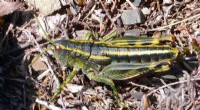
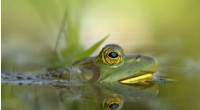
* Biology: The study of life, including living organisms, their structure, function, growth, origin, evolution, and distribution.
* Examples: Zoology, Botany, Microbiology, Genetics, Ecology
* Chemistry: The study of matter and its properties, as well as how matter changes.
* Examples: Organic Chemistry, Inorganic Chemistry, Physical Chemistry, Biochemistry
* Physics: The study of matter, energy, motion, and force.
* Examples: Mechanics, Thermodynamics, Optics, Electricity and Magnetism, Nuclear Physics
* Earth Science: The study of the Earth, its composition, structure, processes, and history.
* Examples: Geology, Meteorology, Oceanography, Astronomy
* Space Science: The study of celestial objects and phenomena in the universe.
* Examples: Cosmology, Astrophysics, Planetary Science
2. Formal Sciences:
* Mathematics: The study of abstract structures, patterns, and relationships using logic and symbolism.
* Examples: Algebra, Calculus, Geometry, Statistics, Discrete Mathematics
* Computer Science: The study of computation, algorithms, and information processing.
* Examples: Software Engineering, Artificial Intelligence, Computer Networks, Data Science
* Logic: The study of valid reasoning and argumentation.
* Statistics: The study of data collection, analysis, and interpretation.
3. Social Sciences:
* Psychology: The study of the mind and behavior of individuals and groups.
* Examples: Cognitive Psychology, Social Psychology, Developmental Psychology, Clinical Psychology
* Sociology: The study of human society, social structures, and social interactions.
* Examples: Anthropology, Criminology, Economics, Political Science, Education
* History: The study of past events, people, and societies.
* Geography: The study of the Earth's surface, its features, and human interactions with the environment.
* Linguistics: The study of human language, its structure, and evolution.
4. Applied Sciences:
* Engineering: The application of scientific principles to solve practical problems and create new technologies.
* Examples: Mechanical Engineering, Electrical Engineering, Civil Engineering, Chemical Engineering
* Medicine: The study and practice of the diagnosis, treatment, and prevention of disease.
* Examples: Surgery, Internal Medicine, Pediatrics, Psychiatry, Pharmacology
* Agriculture: The science and practice of cultivating plants and raising livestock.
* Environmental Science: The study of the interactions between human activities and the environment.
5. Interdisciplinary Fields:
* Biochemistry: The study of the chemistry of living organisms.
* Biophysics: The application of physics to biological systems.
* Neuroscience: The study of the nervous system.
* Astrobiology: The study of the origins and evolution of life in the universe.
This is not an exhaustive list, but it gives a good overview of the diverse branches within the scientific world. Many of these fields overlap and collaborate, demonstrating the interconnectedness of scientific knowledge.