1. Regulation of Transport:
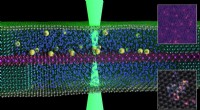
* Selective Permeability: The cell membrane acts as a barrier, controlling what enters and exits the cell. It's selectively permeable, meaning it allows some substances to pass through while blocking others.
* Passive Transport: This type of transport doesn't require energy. It relies on the concentration gradient (movement from high to low concentration) and includes:
* Diffusion: Movement of molecules from a high to low concentration.
* Osmosis: Movement of water across a semi-permeable membrane from an area of high water concentration to an area of low water concentration.
* Facilitated Diffusion: Movement of molecules across the membrane with the help of transport proteins.
* Active Transport: This type of transport requires energy, usually supplied by ATP. It allows molecules to move against their concentration gradient (from low to high concentration). This is important for maintaining the cell's internal environment.
2. Cell Signaling:
* Reception: The cell membrane contains receptors that bind to signaling molecules (like hormones or neurotransmitters) outside the cell.
* Transduction: The binding of signaling molecules triggers a series of events inside the cell, often involving a cascade of protein interactions.
* Response: The signal is eventually translated into a specific cellular response, like gene expression or changes in cell behavior.
3. Cell Recognition and Adhesion:
* Glycoproteins and Glycolipids: These molecules on the cell membrane act as identification markers, helping cells recognize each other and interact.
* Cell Junctions: Special structures in the cell membrane allow cells to connect and form tissues. These junctions can be tight junctions, gap junctions, or desmosomes.
4. Protection:
* The cell membrane acts as a barrier to protect the cell from its surroundings, controlling the passage of harmful substances.
5. Other Processes:
* Endocytosis and Exocytosis: These processes involve the movement of large molecules into and out of the cell, respectively, through the formation of vesicles.
* Cellular Respiration: The cell membrane plays a role in the transport of molecules involved in cellular respiration.
In summary, the cell membrane is a dynamic and complex structure that is essential for the life of a cell. Its functions in transport, signaling, recognition, protection, and other processes are vital for maintaining cellular integrity and function.