Key Distinguishing Features:
* Cell Wall: Plant cells have a rigid cell wall made of cellulose that surrounds the cell membrane. This provides structural support and protection. Animal cells lack a cell wall.
* Chloroplasts: Plant cells contain chloroplasts, the sites of photosynthesis, where sunlight is converted into energy. Animal cells do not have chloroplasts.
* Vacuoles: Plant cells have a large central vacuole that stores water, nutrients, and waste. Animal cells have smaller vacuoles, if present.
* Centrioles: Animal cells have centrioles, which are involved in cell division. Plant cells usually lack centrioles.
Methods for Identification:
1. Microscopy:
- Light Microscope: The most basic tool. Plant cells are typically larger and easier to see than animal cells. Look for the cell wall and chloroplasts.
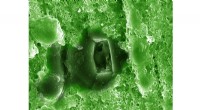
- Electron Microscope: Provides much higher magnification and detail, allowing for the observation of internal structures like the Golgi apparatus, endoplasmic reticulum, and mitochondria.
2. Staining:
- Simple Staining: Use dyes like methylene blue or iodine to highlight cell structures.
- Differential Staining: Uses multiple stains to differentiate different components. For example, a Gram stain can distinguish between bacteria with different cell wall structures.
3. Biochemical Techniques:
- Cell Fractionation: Breaks cells apart and separates organelles based on their density. This allows for the study of specific organelles and their functions.
4. Molecular Techniques:
- DNA Analysis: Comparing genetic material can reveal evolutionary relationships and differentiate between plant and animal cells.
Example:
If you were looking at a sample under a light microscope and observed a cell with a rigid outer boundary, green-colored structures inside, and a large central cavity, you could confidently conclude that it is a plant cell.
Beyond Basic Differences:
While the features above are the most common ways to distinguish between plant and animal cells, keep in mind that there are exceptions and variations within both kingdoms.
* Some plant cells don't have chloroplasts, such as root cells.
* Some animal cells have modified structures that resemble plant cells, such as the contractile vacuoles in some protozoa.
* Specialized cells in both kingdoms can have unique adaptations.
In summary: Identifying plant and animal cells involves a combination of visual observation, staining techniques, and sometimes more advanced methods to analyze their structure and function.