Here's why:
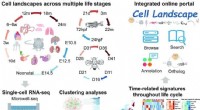
* Cell differentiation is the process where a less specialized cell becomes a more specialized cell type. This happens through the activation and deactivation of specific genes, which control the expression of proteins. Different proteins create different cell structures and functions.
* Specialized cells are cells that have adapted to perform a specific task. For example, muscle cells are specialized for contraction, nerve cells for transmitting signals, and red blood cells for carrying oxygen.
* Tissues are groups of similar cells that work together to perform a specific function. For example, muscle tissue is made up of muscle cells, nervous tissue of nerve cells, and blood tissue of blood cells.
* Organs are structures made of different tissues that work together to perform a complex function. For example, the heart is an organ made of muscle tissue, nervous tissue, and connective tissue.
* Organ systems are groups of organs that work together to perform a major body function. For example, the circulatory system is made up of the heart, blood vessels, and blood.
By allowing cells to differentiate, organisms can develop complex structures and functions that allow them to survive and thrive in their environment.