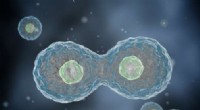
Nuclear fission is a nuclear reaction in which the nucleus of an atom is split into two or more smaller nuclei, often of comparable mass. This process releases a tremendous amount of energy and is the basis for nuclear power plants and atomic bombs.
For example, in the fission of uranium-235, the nucleus is split into two daughter nuclei, typically krypton and barium, along with several neutrons. These daughter nuclei are often identical or nearly identical in mass and atomic number.
Here's a simplified example:
* Uranium-235 (a heavy nucleus) is bombarded with a neutron.
* The nucleus absorbs the neutron and becomes unstable.
* The unstable nucleus splits into two identical nuclei (e.g., krypton and barium) and releases energy and more neutrons.
The released neutrons can cause further fission reactions, leading to a chain reaction that can be controlled in nuclear reactors or uncontrolled in atomic bombs.