Germ Theory:
* Focus: Explains the cause of infectious diseases.
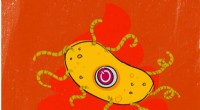
* States: Microorganisms, specifically germs (bacteria, viruses, fungi, and protozoa), can cause disease.
* Evidence: Pasteur's experiments on fermentation and Koch's postulates.
Cell Theory:
* Focus: Describes the fundamental unit of life.
* States: All living organisms are composed of cells, and all cells arise from pre-existing cells.
* Evidence: Observation of cells using microscopes, experiments on cell division and differentiation.
Key Differences:
* Subject Matter: Germ theory focuses on the cause of diseases, while cell theory focuses on the basic building blocks of life.
* Scope: Germ theory is more specific, dealing with microorganisms and their role in disease. Cell theory is broader, applying to all living organisms.
Relationship:
While distinct, the germ theory and cell theory are interconnected:
* Germs are cells: Many germs (bacteria) are single-celled organisms, making them examples of the basic units of life described by the cell theory.
* Cells are affected by germs: Diseases caused by germs are a result of the interactions between the germs and the cells of the infected organism.
In summary, the germ theory explains how diseases are caused by microorganisms, while the cell theory describes the fundamental building blocks of all living organisms. They are separate but interconnected theories that contribute to our understanding of the biological world.