Here's a breakdown of homeostasis:
* Definition: Homeostasis is the ability of an organism to maintain a relatively stable internal environment despite changes in the external environment. This includes factors like temperature, pH, blood sugar levels, and water balance.
* Importance: Homeostasis is essential for survival. If an organism cannot maintain a stable internal environment, its cells will not function properly, and it may die.
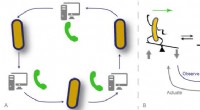
* Mechanisms: Homeostasis is achieved through a complex network of feedback loops, where changes in the internal environment are detected and responded to in order to maintain balance. These feedback loops typically involve:
* Sensors: These detect changes in the internal environment.
* Control center: This receives information from the sensors and determines the appropriate response.
* Effectors: These carry out the response to restore balance.
Example: When you get hot, your body sweats to cool down. Here's how the feedback loop works:
1. Sensors: Temperature receptors in your skin detect an increase in body temperature.
2. Control center: The hypothalamus in your brain receives this information and signals for cooling mechanisms.
3. Effectors: Sweat glands release sweat, which evaporates and cools the skin.
Homeostasis is a vital process that ensures the optimal functioning of all living organisms.