Here's why:
* Passive transport relies on the natural movement of molecules down their concentration gradient, meaning from an area of high concentration to an area of low concentration. This movement doesn't require the cell to expend energy.
Here are the main types of passive transport:
* Simple diffusion: Movement of molecules directly through the membrane, following their concentration gradient.
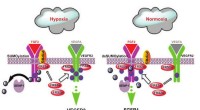
* Facilitated diffusion: Movement of molecules across the membrane with the help of transport proteins, still following the concentration gradient.
* Osmosis: Movement of water across a semipermeable membrane from an area of high water concentration to an area of low water concentration.
Active transport, on the other hand, requires energy (ATP) to move substances against their concentration gradient, from an area of low concentration to an area of high concentration.