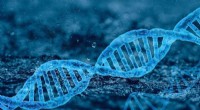
1. Directionality of DNA and RNA: DNA and RNA are both polymers made up of nucleotides, but they have a distinct directionality. DNA strands run in opposite directions (one strand is 5' to 3', the other is 3' to 5'), while RNA is synthesized in a 5' to 3' direction.
2. Template strand: The DNA strand that serves as a template for RNA synthesis is called the template strand (also known as the non-coding strand). This strand has the sequence complementary to the RNA that will be produced.
3. Transcription initiation: RNA polymerase, the enzyme responsible for RNA synthesis, binds to a specific region on the DNA called the promoter located upstream of the gene to be transcribed. This promoter region dictates which strand of DNA will be used as the template.
4. Complementary base pairing: RNA polymerase moves along the template strand and uses it as a guide to build a new RNA molecule. This occurs by base pairing with the template strand. The rules for base pairing are:
* Adenine (A) pairs with Uracil (U) in RNA (instead of Thymine (T) as in DNA)
* Guanine (G) pairs with Cytosine (C)
5. Coding strand: The other strand of DNA, called the coding strand (also known as the non-template strand), is not used directly in RNA synthesis. Its sequence matches the RNA being produced, except that uracil (U) replaces thymine (T).
In summary, only one strand of DNA is used as a template for RNA synthesis because of the specific directionality of DNA and RNA, the presence of a promoter region, and the complementary base pairing mechanism.