Here's a breakdown:
* Variation: Organisms within a population have variations in their traits. These variations can be due to genetic mutations, environmental factors, or a combination of both.
* Competition: Organisms compete for resources like food, water, shelter, and mates.
* Survival of the fittest: Individuals with traits that make them better suited to their environment are more likely to survive and reproduce. These traits are called adaptations.
* Reproduction: Organisms with adaptations pass on their genes to their offspring, increasing the frequency of those beneficial traits in the population.
* Evolution: Over many generations, natural selection leads to the evolution of populations, as organisms become better adapted to their environment.
Key points about natural selection:
* It is a gradual process that occurs over long periods.
* It is a random process in terms of which mutations arise, but it is non-random in the sense that it selects for traits that increase an organism's fitness.
* It is the primary mechanism for evolutionary change.
Examples of natural selection include:
* Peppered moths: During the Industrial Revolution, dark-colored moths became more common in polluted areas because they were better camouflaged from predators.
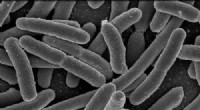
* Antibiotic resistance: Bacteria that are resistant to antibiotics are more likely to survive and reproduce, leading to the spread of antibiotic resistance.
Overall, natural selection is a powerful force that shapes the diversity of life on Earth. It is a key concept in biology and helps us understand how species have evolved over millions of years.