1. Cell Junctions:
* Cell junctions are specialized structures that connect cells together, providing structural support, communication pathways, and regulation of movement of molecules between cells. There are several types of cell junctions:
* Tight junctions: Seal the space between cells to prevent leakage of fluids and molecules.
* Desmosomes: Provide strong adhesion between cells, anchoring them together like rivets.
* Gap junctions: Form channels between cells, allowing for the exchange of ions, small molecules, and electrical signals.
2. Cell Fusion:
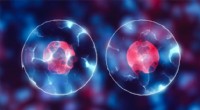
* Cell fusion is the process by which two or more cells combine to form a single cell. This is a natural process in some organisms, like in the development of muscle cells, and can also be induced artificially in research.
3. Cell Interactions:
* Cell interactions is a broader term that encompasses any type of contact or communication between cells. This could include:
* Cell adhesion: The attachment of one cell to another.
* Cell signaling: The exchange of information between cells via chemical messengers.
* Cell recognition: The ability of cells to identify and interact with specific types of cells.
So, the answer to your question depends on what you're asking. Can you provide more context? For example, are you talking about:
* How cells physically connect to each other? Then the answer is cell junctions.
* How cells merge into one? Then the answer is cell fusion.
* What happens when cells come into contact? Then the answer is cell interactions.
Please provide more detail so I can give you a more specific and helpful answer.