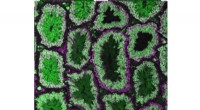
Histology is the study of how tissues are structured and how they work. Knowing what a normal tissue looks like and how it normally works is important for recognizing different diseases. It also helps in figuring out what causes certain diseases, how to treat those diseases, and whether the treatment has worked. Histology can be considered as the study of anatomy and physiology at the microscopic level.
Anatomy and physiology are fields of study that seek to understand how an organism’s body is structured and connected. The connections can be physical, such as muscle connecting to bones, or hormonal, such as how the brain communicates with the thyroid. The focus of anatomy is to understand the physical structure of the many systems in the body, such as the circulatory system, the skeletal system, and digestive system. The focus of physiology is to understand how different organs of the body communicate with each other to maintain homeostasis, which is the process in which an organism maintains stable and optimal levels of nutrients, energy, and temperature.
Each organ of a body consists of four basic types of tissues: epithelial, connective, muscle and nervous tissue. However, the cells in these tissues can be shaped differently when they are found in different organs. In fact, how the cells in a tissue are shaped can predict how that tissue functions. This is because the same patterns of structure and function are repeated throughout the whole organism. Some tissues give rigid structure support, such as bone; others contract to general force for movement, such as skeletal muscle; while others form pouches that secrete fluids, such as salivary glands.
Diseases occur because normal tissues are harmed or do the wrong thing. Pathology and pathophysiology are the study of diseases and malformed tissues in hopes of understanding their causes and potential treatments. Pathology examines how a tissue is abnormally shaped. Pathophysiology examines how a tissue is abnormally producing molecules and fluids. Neither pathology or pathophysiology would be possible without histology, since a researcher would not recognize what is abnormal without knowledge of what is normal.
One of the most obvious signs of tissue damage is inflammation, which histology clearly detects. Inflammation is the recruitment of many immune cells to a site of injury or disease. Inflammation also involves a dilation of blood vessels and a swelling of the damaged area. The different cell types of the immune system have distinct shapes and features, which can be seen through the histological examination of a tissue. Histology not only studies the features of invading microorganisms in tissues, but can also examine those microbes after they are removed from the body, stained with a chemical dye, and viewed under a microscope.