* Proteins as Products of Genes: Proteins are encoded by genes, and genes are subject to mutations over time. These mutations can alter the amino acid sequence of a protein, which in turn can affect its structure and function.
* Structural Similarity Reflects Ancestry: Species that are closely related share a more recent common ancestor. This means they have had less time for mutations to accumulate in their genes, including those coding for proteins. Therefore, their proteins are likely to have more similar structures.
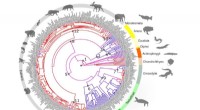
* Comparative Analysis: By comparing the protein structures of different species, scientists can identify similarities and differences. These comparisons can reveal evolutionary relationships and help to build phylogenetic trees, which are diagrams that illustrate the evolutionary history of organisms.
Examples of How Protein Structure Can Be Used as an Index of Relatedness:
* Cytochrome c: This protein is involved in cellular respiration and is found in a wide range of organisms. The amino acid sequence of cytochrome c varies between species, but the overall structure is very similar. This similarity suggests that cytochrome c evolved early in the history of life and has been conserved in many different lineages.
* Hemoglobin: This protein is responsible for carrying oxygen in the blood. The structure of hemoglobin is very similar in mammals, but it differs slightly in other vertebrates. This difference can be used to infer the evolutionary relationships between different vertebrate groups.
Limitations:
* Convergent Evolution: Sometimes, two species may evolve similar protein structures independently due to similar environmental pressures. This is called convergent evolution, and it can make it difficult to determine if a similarity is due to shared ancestry or convergent evolution.
* Rates of Evolution: Different proteins evolve at different rates. Some proteins are more conserved than others, meaning they change very slowly over time. This can make it difficult to compare protein structures from species that are very distantly related.
In conclusion, while there are limitations, protein structure analysis is a powerful tool for understanding evolutionary relationships. The more similar the protein structures are between two species, the more closely related they are likely to be.