Here's a breakdown:
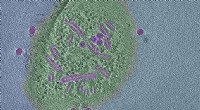
* Mitochondrial matrix: This is the fluid-filled space within the inner membrane of the mitochondria. It's where the citric acid cycle (Krebs cycle) takes place, which generates electron carriers (NADH and FADH2).
* Inner mitochondrial membrane: This membrane is highly folded, creating cristae that increase its surface area. It contains the electron transport chain and ATP synthase, the key players in ATP production.
The process of ATP synthesis occurs through oxidative phosphorylation. Here's how it works:
1. Electron transport chain: Electrons from NADH and FADH2, generated in the citric acid cycle, move down the electron transport chain, releasing energy.
2. Proton gradient: This energy is used to pump protons (H+) from the mitochondrial matrix across the inner membrane and into the intermembrane space. This creates a concentration gradient.
3. ATP synthase: The protons flow back across the membrane through ATP synthase, a protein complex that uses this energy to convert ADP and inorganic phosphate (Pi) into ATP.
So, while the citric acid cycle in the matrix provides the necessary electron carriers, the actual ATP production occurs at the inner mitochondrial membrane thanks to the electron transport chain and ATP synthase.