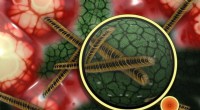
While he didn't actually discover cells in the sense that we understand them today (he was looking at the dead cell walls of cork), his observations with a microscope laid the groundwork for future scientists to explore the fundamental building blocks of life.
Here's a breakdown of the contributions to the discovery of cells:
* Robert Hooke (1665): Observed the cell walls of cork under a microscope and coined the term "cell" because the chambers reminded him of the cells of a monastery.
* Anton van Leeuwenhoek (1674): Used his own, more powerful microscopes to observe living cells, including bacteria, protozoa, and blood cells.
* Matthias Schleiden (1838): Proposed that all plants are made up of cells.
* Theodor Schwann (1839): Extended this concept to animals, establishing the foundation for the cell theory.
* Rudolf Virchow (1855): Added the key principle to the cell theory that all cells arise from pre-existing cells.
While Robert Hooke's initial observation was of dead cell walls, his work paved the way for further exploration and the eventual understanding of the cell as the fundamental unit of life.