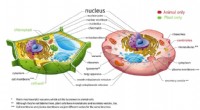
* Cells: The fundamental building blocks of all living organisms. They carry out essential life functions.
* Tissues: Groups of similar cells that work together to perform a specific function. Examples include muscle tissue, nervous tissue, and connective tissue.
* Organs: Structures made up of different tissues that work together to perform a complex function. For example, the heart is an organ composed of muscle tissue, nervous tissue, and connective tissue, and its function is to pump blood.
* Organ Systems: Groups of organs that work together to carry out major bodily functions. For example, the digestive system includes organs like the stomach, intestines, and liver, and its function is to break down food and absorb nutrients.
Here's a simple analogy:
* Imagine a house.
* Bricks represent cells.
* Walls represent tissues.
* Rooms represent organs.
* The entire house represents an organ system.
In summary:
* Cells form tissues, tissues form organs, and organs work together to form organ systems. This hierarchical organization allows for complex functions in living organisms.