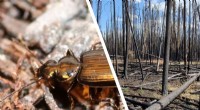
* Lack of Chlorophyll: Unlike plants, mushrooms don't have chlorophyll, the pigment that allows them to photosynthesize and produce their own food. They are heterotrophs, meaning they rely on external sources of energy.
* Decomposer Role: Saprophytic fungi are crucial for breaking down dead organic matter, like fallen leaves, dead wood, and animal carcasses. They release enzymes that digest complex organic molecules, turning them into simpler substances that can be absorbed by the fungus.
* Nutrient Cycling: This decomposition process plays a vital role in nutrient cycling. By breaking down dead organisms, mushrooms release nutrients back into the soil, making them available to other plants and organisms.
* Energy Source: The breakdown of organic matter provides mushrooms with the energy they need to grow and reproduce.
* Survival Advantage: This strategy gives mushrooms a survival advantage. They can thrive in environments where other organisms struggle to survive, such as forests with abundant decaying matter.
In summary, mushrooms are saprophytic because they lack chlorophyll and have evolved a unique ability to obtain energy and nutrients by decomposing organic matter. This plays a crucial role in nutrient cycling and ecosystem health.