Here's why:
* Fossil evidence: The oldest known fossils, dating back to about 3.5 billion years ago, are of prokaryotes.
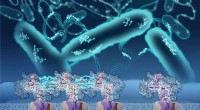
* Simpler structure: Prokaryotic cells are simpler in structure than eukaryotic cells, lacking membrane-bound organelles like a nucleus. This suggests they evolved earlier.
* Metabolic diversity: Prokaryotes exhibit a wide range of metabolic capabilities, including photosynthesis and nitrogen fixation, which were likely essential for early life on Earth.
* Abundance and adaptability: Prokaryotes are incredibly abundant and adaptable, thriving in diverse environments. This suggests they have been around for a long time and have evolved to survive in various conditions.
While the exact origin of life remains a mystery, the evidence strongly suggests that prokaryotes were the first forms of life on Earth. They are the ancestors of all other living things, including humans.