Plankton:
* Definition: A general term for organisms that drift in water.
* Types: Two main types:
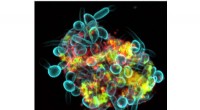
* Phytoplankton: Microscopic plants (algae) that are producers in the food chain. They use photosynthesis to create their own food.
* Zooplankton: Microscopic animals that eat phytoplankton and other zooplankton.
* Size: Can be microscopic or larger, but they are always at the mercy of the currents.
Algae:
* Definition: A diverse group of aquatic organisms that can be single-celled (microscopic) or multicellular (large seaweed).
* Types: Many different types, including green algae, red algae, and brown algae.
* Size: Ranges from microscopic to very large, like kelp.
* Habitat: Live in a variety of aquatic environments, including freshwater, saltwater, and even snow!
Key Differences:
* Plankton is a category of organisms, while algae is a type of organism. All phytoplankton are algae, but not all algae are plankton.
* Size: While some algae are microscopic (like phytoplankton), other algae can be very large (like seaweed). Plankton, by definition, are always at the mercy of currents and are generally smaller.
* Mobility: Plankton are passively drifting, while some algae can be motile (capable of movement).
Here's a helpful analogy: Think of plankton as the entire "seafood" category at a restaurant, and algae as a specific type of "seafood" like shrimp or salmon.
In short, all phytoplankton are algae, but not all algae are plankton.