Here's why:
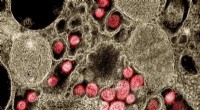
* Endosymbiotic Theory: Mitochondria are believed to have originated from free-living bacteria that were engulfed by early eukaryotic cells. They maintain their own DNA (mtDNA) and ribosomes, distinct from the cell's nuclear DNA.
* Self-Replication: Mitochondria replicate independently through binary fission, similar to bacteria. They have their own genes and enzymes for this process.
* Limited Survival Outside the Cell: While mitochondria can survive for a short period outside the cell, they are not truly independent organisms. They require the cellular environment for long-term survival and optimal functioning.
It's important to note that while mitochondria exhibit some characteristics of independent organisms, they are still considered organelles and are vital components of eukaryotic cells. They play a critical role in cellular respiration, producing energy (ATP) for the cell.