Here's a breakdown:
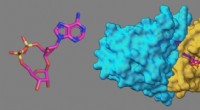
* Degradative enzyme: This means it breaks down a molecule, in this case, DNA.
* Recognizes specific nucleotide sequences: Each restriction enzyme has a specific short sequence of DNA it recognizes, usually 4-8 base pairs long. This sequence is called the restriction site.
* Cuts up DNA: When the enzyme finds its restriction site, it cuts the DNA molecule at that point. This cut can be a blunt cut (both strands cut at the same point), or a sticky cut (the ends of the cut DNA strands have overhangs).
Restriction enzymes are essential tools in molecular biology for various reasons, including:
* DNA cloning: Creating recombinant DNA molecules.
* Gene editing: Modifying specific genes in organisms.
* DNA fingerprinting: Identifying individuals based on their unique DNA sequences.
Let me know if you'd like more details on any of these applications!