Professionals:
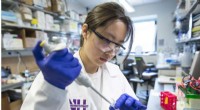
* Scientists: This is the most common group, including researchers, professors, and engineers who conduct experiments, analyze data, and publish their findings. They specialize in various fields, such as biology, physics, chemistry, astronomy, and more.
* Technicians: They provide technical support to scientists, conducting experiments, maintaining equipment, and collecting data.
* Engineers: They apply scientific principles to design and build solutions to real-world problems.
* Medical professionals: They use scientific knowledge to diagnose and treat diseases.
Amateurs:
* Citizen scientists: Individuals who participate in scientific research projects, often by collecting data or analyzing images.
* Hobbyists: People who enjoy conducting experiments or exploring scientific concepts in their free time.
Other groups:
* Students: Individuals at all levels of education, from elementary school to graduate school, learn about science and may participate in research projects.
* Policymakers: They make decisions about funding and regulations related to science.
* Journalists: They report on scientific discoveries and developments.
In essence, science is a collaborative effort involving people from various backgrounds and professions.
It's important to remember that anyone can contribute to science, regardless of their background or formal training. The scientific process is accessible to all who are curious and have a desire to explore the world around us.