Here's a breakdown:
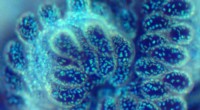
* Bacteria: These single-celled prokaryotes are found in virtually every environment on Earth, from the deepest oceans to the highest mountains. Their sheer numbers are staggering, with estimates suggesting there are billions of bacteria in a single gram of soil.
While viruses are incredibly abundant, they are not considered living organisms because they cannot reproduce on their own and require a host cell to survive.
Other abundant life forms include:
* Archaea: These are single-celled prokaryotes that are often found in extreme environments, like hot springs and salt lakes.
* Fungi: These eukaryotic organisms include mushrooms, yeasts, and molds. They play a crucial role in decomposition and nutrient cycling.
* Protists: This diverse group of mostly single-celled eukaryotic organisms includes algae and protozoa.
While animals and plants are also important components of Earth's biodiversity, their overall abundance is significantly lower compared to microorganisms.