Structure:
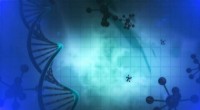
* Double Helix: DNA is a double helix, resembling a twisted ladder. Each strand is made of a chain of nucleotides, each containing a sugar (deoxyribose), a phosphate group, and a nitrogenous base.
* Nitrogenous Bases: The four nitrogenous bases in DNA are Adenine (A), Thymine (T), Guanine (G), and Cytosine (C). A pairs with T, and G pairs with C through hydrogen bonds.
* Antiparallel Strands: The two strands of DNA run in opposite directions (antiparallel), with one strand running 5' to 3' and the other 3' to 5'.
Location:
* Nucleus: The majority of DNA in a eukaryotic cell is found within the nucleus, specifically within chromosomes. Chromosomes are tightly packed structures of DNA and associated proteins (histones) that condense during cell division.
* Mitochondria: Eukaryotic cells also contain a small amount of DNA within their mitochondria, called mitochondrial DNA (mtDNA). mtDNA is circular and encodes for some mitochondrial proteins.
* Chloroplasts (in plants): Plant cells also contain a small amount of DNA within their chloroplasts, called chloroplast DNA (cpDNA). cpDNA is circular and encodes for some chloroplast proteins.
Organization within the Nucleus:
* Chromatin: In the nucleus, DNA is not just a loose strand. It's organized into a complex structure called chromatin, composed of DNA and proteins.
* Nucleosomes: The basic unit of chromatin is the nucleosome, consisting of a DNA segment wrapped around a core of eight histone proteins.
* Higher Order Structure: Nucleosomes further fold and condense into higher order structures, ultimately forming chromosomes.
Key Points:
* Eukaryotic DNA is linear, unlike the circular DNA found in prokaryotes.
* The location and organization of DNA within the nucleus are essential for the regulation of gene expression.
* The presence of DNA in mitochondria and chloroplasts supports the theory of endosymbiosis, which suggests that these organelles originated from independent bacteria.
This information gives a basic overview of DNA structure and location in eukaryotes. There is much more to explore about the complex structure and functions of DNA.