Here's a breakdown:
* Bacteria are living organisms because they have the following characteristics:
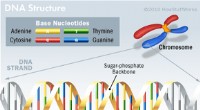
* They are cellular and have a cell membrane, cytoplasm, and DNA.
* They can reproduce independently through binary fission, meaning they can make copies of themselves without relying on another organism.
* They have their own metabolism and can take in nutrients and produce energy.
* They can adapt to changes in their environment.
* Viruses, on the other hand, are not considered living organisms because:
* They are acellular, meaning they do not have a cell structure.
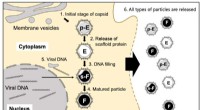
* They cannot reproduce independently. Instead, they rely on infecting a host cell and using its machinery to make copies of themselves.
* They do not have their own metabolism. They rely on the host cell for energy and resources.
* They are not considered "living" until they infect a host cell.
Therefore, the ability to reproduce independently is the defining characteristic that distinguishes bacteria (living) from viruses (non-living).