Here's how it works:
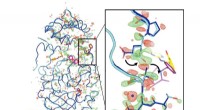
* DNA Structure: DNA is a double helix made of two strands of nucleotides.
* Nucleotides: Each nucleotide consists of three parts:
* Phosphate group: This is the negatively charged part that links nucleotides together.
* Deoxyribose sugar: This is a five-carbon sugar molecule that forms the backbone of the DNA strand.
* Nitrogenous base: These are the molecules that form the "rungs" of the DNA ladder and are responsible for carrying genetic information. There are four types: adenine (A), guanine (G), cytosine (C), and thymine (T).
* Pairing: The nitrogenous bases on opposite strands of DNA pair up specifically (A with T, and C with G). These pairs are held together by hydrogen bonds.
So, between the bases of DNA you have the deoxyribose sugar from one nucleotide and the phosphate group from the next nucleotide, forming the backbone of the DNA molecule.