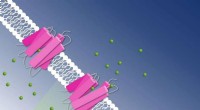
ATP Synthase is a remarkable molecular machine, crucial for life as we know it. It's the enzyme responsible for producing ATP, the primary energy currency of cells. This process, known as oxidative phosphorylation, happens in the mitochondria of eukaryotic cells and in the cell membrane of prokaryotes.
Here's a breakdown of ATP Synthase:
1. Structure:
* It's a complex protein with two main parts:
* F0 subunit: Embedded in the membrane, it acts as a proton channel.
* F1 subunit: Protrudes into the mitochondrial matrix or cytoplasm. It contains the catalytic sites where ATP is synthesized.
* The F1 subunit has three α and three β subunits, forming a hexagonal structure.
* The F0 subunit consists of several different proteins, including a ring of c subunits that rotate.
2. Function:
* Proton gradient: ATP Synthase utilizes the proton gradient across the membrane. Protons (H+) are pumped from the mitochondrial matrix to the intermembrane space by the electron transport chain.
* Rotation: The movement of protons through the F0 subunit causes the c subunit ring to rotate.
* ATP synthesis: The rotation of the c ring drives conformational changes in the F1 subunit, which facilitates the phosphorylation of ADP to ATP. Essentially, the energy of the proton gradient is harnessed to create ATP.
3. Importance:
* Cellular energy: ATP is essential for almost all cellular processes, including muscle contraction, active transport, and biosynthesis.
* Metabolic processes: ATP Synthase plays a central role in energy metabolism by converting the energy from food into a usable form.
* Disease implications: Dysfunction of ATP Synthase can lead to various diseases, including mitochondrial disorders and neurological conditions.
4. Analogies:
* Imagine a water wheel powered by a stream. The water (protons) flowing through the wheel (F0) drives the rotation of the millstone (F1), which grinds grain (ADP) into flour (ATP).
* Another analogy is a water turbine: the flow of water (protons) through the turbine (F0) turns the rotor (c ring), which generates energy (ATP).
In summary, ATP Synthase is a vital enzyme that utilizes the proton gradient to synthesize ATP, the energy currency of life. Its function is crucial for maintaining cellular processes and overall organismal health.