Here are some key features and types of scientific symbols:
Features:
* Concise: Symbols are designed to be brief and easily understood.
* Universal: They are often standardized across different scientific fields and cultures.
* Precise: Symbols represent specific meanings and avoid ambiguity.
Types:
* Letters: Many symbols are single letters, such as 'g' for gravity, 'c' for the speed of light, or 'K' for Kelvin.
* Greek Letters: Greek letters are frequently used in scientific notation, like 'α' for alpha decay, 'π' for pi, or 'Δ' for change.
* Special Characters: Symbols like '+' for addition, '-' for subtraction, or '=' for equality are common across various scientific disciplines.
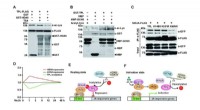
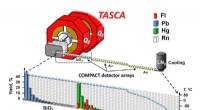
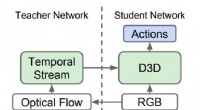
* Diagrams and Graphs: Visual representations like chemical structures, flow charts, and graphs are also powerful scientific symbols.
* Abbreviations: Shorthand terms like 'DNA', 'RNA', or 'H2O' are often used in scientific literature.
* Units of Measurement: Symbols like 'm' for meters, 's' for seconds, or 'kg' for kilograms are essential for expressing measurements.
Examples:
* Chemical elements: H for hydrogen, O for oxygen, Fe for iron.
* Physical quantities: 'v' for velocity, 'F' for force, 'E' for energy.
* Mathematical operations: '√' for square root, '∞' for infinity, '∑' for summation.
* Units of measurement: 'm' for meters, 's' for seconds, 'A' for amperes.
* Biological structures: 'DNA', 'RNA', 'ATP'.
Importance:
Scientific symbols are essential for:
* Clear communication: They allow scientists to express complex ideas efficiently.
* International understanding: Universal symbols facilitate collaboration across cultures and languages.
* Mathematical and computational efficiency: Symbols enable concise and accurate mathematical calculations.
* Conciseness and clarity: They help reduce the amount of text needed to convey scientific information.
By using scientific symbols, scientists can communicate their findings, theories, and ideas in a precise and universally understood manner, fostering progress in scientific research and understanding.