Here's a breakdown of what proteins contain:
* Amino Acids: These are the building blocks of proteins. Each amino acid has a central carbon atom bonded to:
* An amino group (-NH2): A nitrogen-containing group.
* A carboxyl group (-COOH): An acidic group.
* A hydrogen atom (-H).
* A side chain (R-group): This is the part that varies between different amino acids, giving each its unique properties.
* Peptide Bonds: Amino acids are linked together by peptide bonds. These are formed by a dehydration reaction, where a water molecule is removed, and the carboxyl group of one amino acid joins with the amino group of the next.
* Polypeptide Chains: A chain of amino acids linked by peptide bonds is called a polypeptide chain.
* Protein Structure: The final three-dimensional structure of a protein is critical for its function. This structure is determined by the sequence of amino acids and can be described at four levels:
* Primary Structure: The linear sequence of amino acids.
* Secondary Structure: Local folding patterns within the polypeptide chain, such as alpha-helices and beta-sheets.
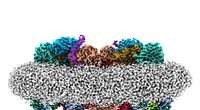
* Tertiary Structure: The overall three-dimensional shape of a single polypeptide chain.
* Quaternary Structure: The arrangement of multiple polypeptide chains (subunits) in a protein complex.
In summary:
Proteins are complex molecules essential for life. They are made up of amino acids linked together by peptide bonds. Their structure and function are determined by the sequence of amino acids and the resulting three-dimensional shape.