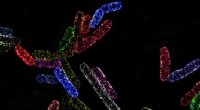
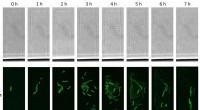
* Reproduction: Bacteria reproduce asexually, meaning they don't need a partner to create offspring. Cell division is their primary method of reproduction.
* Population Growth: The ability to rapidly divide allows bacteria to quickly increase their population size, enabling them to colonize new environments and compete effectively for resources.
* Adaptation: While mutations are rare, they do occur during DNA replication. A rapidly dividing population increases the chances that beneficial mutations will arise, leading to adaptation and evolution.
* Repair: Cell division can also be used to repair damaged cells. A damaged cell can divide, and one of the daughter cells can retain the damage while the other can continue to function normally.
In summary, cell division is the cornerstone of bacterial life, allowing them to reproduce, grow, adapt, and repair themselves. It's the foundation of their survival and success as a species.