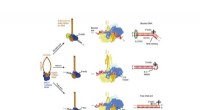
* mRNA: This molecule carries the genetic code from DNA in the nucleus to the ribosome in the cytoplasm.
* Ribosome: This acts as a workbench, reading the mRNA code and assembling amino acids into a specific protein.
Here's a simplified breakdown of the process:
1. DNA in the nucleus provides the blueprint for a protein. This blueprint is transcribed into mRNA.
2. mRNA travels to the ribosome in the cytoplasm.
3. The ribosome reads the mRNA code. It uses this code to determine the order in which amino acids should be linked together.
4. Transfer RNA (tRNA) molecules bring specific amino acids to the ribosome. The ribosome matches each tRNA molecule with the corresponding codon on the mRNA.
5. The ribosome links the amino acids together to form a chain. This chain folds into a unique three-dimensional shape, forming a functional protein.
Therefore, ribosomes and mRNA are essential partners in protein synthesis. This process is fundamental to all living organisms and is responsible for building everything from enzymes to hormones to structural components of cells.