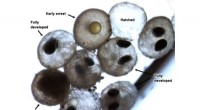
Proteinoid Microspheres:
* Non-living: They are simply aggregates of protein molecules. They lack the complex organization and processes found in living cells.
* No DNA or RNA: They don't contain genetic material, so they cannot replicate or pass on information.
* Simple structure: They are essentially spheres made of protein, with no internal compartments or organelles.
* Limited functions: While they can exhibit some basic properties like growth and division, these are not the same as the complex processes in living cells.
* Not cellular: They are not enclosed by a membrane, which is a crucial feature of cells.
Cells:
* Living: They are the basic unit of life, with complex organization and numerous processes.
* Contain DNA and RNA: Genetic material allows cells to replicate and transmit information.
* Complex structure: Cells have internal compartments (organelles) with specialized functions.
* Diverse functions: Cells perform a wide variety of tasks essential for life, from energy production to communication.
* Enclosed by a membrane: The cell membrane separates the cell from its environment and regulates what enters and exits.
In summary:
Proteinoid microspheres are interesting models for studying the origins of life, but they lack the essential characteristics of living cells. They offer insights into how early life forms might have arisen, but they are not cells themselves.