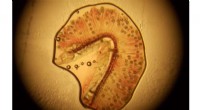
Here's a breakdown of the key aspects of authigenesis:
Formation Process:
* Chemical reactions: Authigenic minerals form through chemical reactions between pore fluids (water and dissolved minerals) and existing sediment grains.
* Precipitation: Dissolved minerals in the pore fluids become supersaturated, leading to precipitation and the formation of new minerals.
* Diagenesis: Authigenesis is a crucial part of the overall diagenesis process, which encompasses all the physical and chemical changes occurring after sediment deposition.
Characteristics of Authigenic Minerals:
* Crystalline structure: Authigenic minerals are typically well-crystallized, often exhibiting distinctive shapes and textures.
* Association with sediment: They are intimately associated with the surrounding sediment and may fill pore spaces, coat grains, or even replace existing minerals.
* Time of formation: Authigenic minerals form over varying time scales, from shortly after deposition to millions of years later.
Examples of Authigenic Minerals:
* Quartz: Can form from silica-rich pore fluids, filling in pore spaces.
* Clay minerals: Commonly form as alteration products of existing minerals or from precipitation of dissolved minerals.
* Calcite: May precipitate from carbonate-rich waters, cementing sand grains together.
* Pyrite: Forms in environments with high organic matter and sulfate, often appearing as cubic crystals.
* Gypsum and anhydrite: Form in evaporative environments, often forming layers within sedimentary rocks.
Significance of Authigenesis:
* Sedimentary rock formation: Authigenic minerals play a crucial role in the formation of sedimentary rocks, influencing their texture, porosity, and permeability.
* Understanding depositional environments: The types and abundance of authigenic minerals can provide clues about the depositional environment and the conditions that existed after sediment deposition.
* Mineral resources: Some authigenic minerals, like pyrite, are economically important as sources of metals.
* Petroleum exploration: Authigenic minerals can impact oil and gas exploration, as they can affect the porosity and permeability of reservoir rocks.
In summary, authigenesis is a critical process in sedimentary geology, shaping the formation and characteristics of sedimentary rocks and providing insights into past environments and geological processes.