While morphology plays a role in understanding evolutionary relationships, it's not the sole study of those relationships. Here's a breakdown:
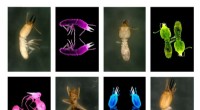
* Morphology is the study of the form and structure of organisms. It looks at things like:
* External features (shape, size, color)
* Internal structures (bones, organs, tissues)
* Developmental stages (embryology)
* Evolutionary relationships are determined by phylogeny. Phylogeny uses various sources of data, including:
* Morphology (as described above)
* Genetics (DNA, RNA sequences)
* Fossil evidence
* Biogeography (distribution of organisms)
In short: Morphology is a tool used within phylogeny, but phylogeny is the broader study of evolutionary relationships.