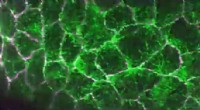
1. No Cellular Structure: Viruses are not made up of cells. They are simply a piece of genetic material (DNA or RNA) enclosed in a protein coat called a capsid. They lack the complex internal structures (like organelles) found in living cells.
2. No Metabolism: Viruses cannot carry out their own metabolism. They cannot generate energy or produce their own proteins. Instead, they rely on the host cell's machinery to replicate.
3. No Independent Reproduction: Viruses cannot reproduce independently. They require a host cell to provide the resources and machinery for replication. They essentially hijack the host cell's machinery to make copies of themselves.
4. No Homeostasis: Viruses cannot maintain a stable internal environment. They are simply inert particles outside of a host cell.
5. No Growth and Development: Unlike living cells, viruses do not grow or develop. They exist in a single, unchanging form until they infect a host cell.
6. No Response to Stimuli: Viruses do not exhibit responses to environmental changes or stimuli.
In summary: Viruses are essentially parasites that require a host cell to survive and reproduce. They lack the key characteristics of life that define a living organism, such as cellular structure, metabolism, independent reproduction, and homeostasis.