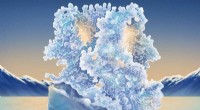
Protein denaturation is the process where a protein loses its native three-dimensional structure, becoming unfolded and non-functional. This loss of structure is often irreversible, although in some cases, the protein can refold back into its native state under specific conditions.
Here's a breakdown of what happens during denaturation:
* Disruption of Non-Covalent Bonds: Denaturation primarily involves the breaking of weak non-covalent bonds that maintain the protein's structure, including hydrogen bonds, hydrophobic interactions, and ionic bonds.
* Unfolding of Protein: As these bonds break, the protein unravels from its tightly packed, folded conformation.
* Loss of Function: The unique three-dimensional structure of a protein is crucial for its biological function. Denaturation disrupts this structure, rendering the protein inactive.
What causes denaturation?
* Heat: Increased temperature provides energy to break the weak bonds holding the protein's structure together.
* pH Changes: Extreme pH values (highly acidic or basic) can disrupt ionic bonds and disrupt the protein's structure.
* Chemicals: Certain chemicals like detergents, strong acids/bases, and heavy metal ions can interact with the protein, disrupting its structure.
* Mechanical Agitation: Shaking or stirring can physically unfold the protein.
* Organic Solvents: Solvents like alcohol and acetone can disrupt hydrophobic interactions and cause unfolding.
Consequences of Denaturation:
* Loss of Biological Activity: Denatured proteins are unable to perform their normal functions.
* Aggregation: Unfolded proteins can clump together, forming aggregates that can be harmful to cells.
* Precipitate Formation: Denatured proteins may become insoluble and precipitate out of solution.
Examples of Denaturation in Everyday Life:
* Cooking an egg: The heat denatures the proteins in egg white, causing it to solidify.
* Curdling of milk: The acid in lemon juice denatures the milk proteins, causing it to curdle.
* Permanent hair straightening: Chemicals break the bonds in hair proteins, allowing them to be reshaped.
In summary, denaturation is a process that disrupts the structure of proteins, leading to loss of function and potential aggregation. It is influenced by factors like temperature, pH, and chemicals, and has various applications in everyday life and scientific research.