* Unicellular: The organism consists of a single cell.
* Not eukaryote: This means it's a prokaryote.
* Observation: We need to find something that specifically distinguishes prokaryotes from eukaryotes.
Here are some observations that would indicate a unicellular organism is a prokaryote (not a eukaryote):
* Lack of a nucleus: Prokaryotes do not have a membrane-bound nucleus to contain their DNA. Their DNA is located in a region called the nucleoid, but it's not enclosed within a separate membrane.
* Absence of membrane-bound organelles: Prokaryotes lack other membrane-bound organelles like mitochondria, Golgi apparatus, endoplasmic reticulum, etc.
* Smaller size: Prokaryotic cells are generally much smaller than eukaryotic cells.
* Simple cell structure: Prokaryotes have a simpler overall cell structure compared to eukaryotes.
Example:
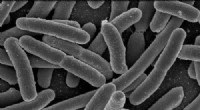
If you observe a unicellular organism under a microscope and see that it lacks a nucleus and has no internal membrane-bound structures, that would be strong evidence that it's a prokaryote.