General Features:
* Multicellular: Most fungi are multicellular organisms, meaning they are made up of many cells.
* Eukaryotic: They have a distinct nucleus and other membrane-bound organelles within their cells.
* Heterotrophic: Fungi cannot produce their own food like plants. They obtain nutrients by absorbing them from their surroundings.
* Filamentous: Fungi are often composed of thread-like structures called hyphae. These hyphae grow and branch to form a network called a mycelium.
Appearance Variations:
* Mushrooms: The most familiar form of fungi, with a cap, gills or pores underneath, and a stalk.
* Mold: Fuzzy, cottony growth, often found on food or damp surfaces.
* Yeast: Single-celled fungi that are round or oval in shape.
* Lichen: A symbiotic relationship between fungi and algae. They can have various shapes and colors, from crust-like to leafy to shrub-like.
* Mycelia: The web-like network of hyphae that grows beneath the surface, often hidden from view.
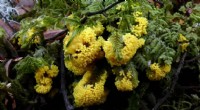
Color: Fungi can be found in a wide array of colors, including white, brown, red, yellow, orange, and green. Some fungi are brightly colored to attract insects for spore dispersal.
Texture: Fungi can be smooth, rough, slimy, or powdery depending on the species.
Overall: Fungi can be extremely diverse in appearance. While some are large and easily visible, others are microscopic and require specialized equipment to be observed.