Here's a breakdown:
Transpiration:
* Mechanism: The movement of water vapor from the plant's leaves into the atmosphere through tiny pores called stomata.
* Driving force: Evaporation of water from the leaves creates a negative pressure gradient that pulls water upwards through the plant.
* Energy requirement: Requires energy for the evaporation of water.
* Selectivity: Not selective, it's simply the movement of water vapor.
Osmosis:
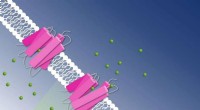
* Mechanism: The movement of water across a semipermeable membrane from an area of high water concentration to an area of low water concentration.
* Driving force: The difference in water potential (concentration gradient) across the membrane.
* Energy requirement: Passive process, does not require energy.
* Selectivity: Highly selective, the membrane allows only certain molecules to pass through.
Key differences:
* Direction of movement: Transpiration moves water out of the plant, while osmosis can move water into or out of a cell depending on the water potential gradient.
* Driving force: Transpiration is driven by evaporation and pressure gradient, while osmosis is driven by concentration gradient.
* Energy requirement: Transpiration is an active process requiring energy, while osmosis is a passive process.
* Selectivity: Transpiration is non-selective, while osmosis is selective.
Therefore, although both transpiration and osmosis involve water movement, they are distinct processes with different mechanisms and driving forces.