* All living things share a common ancestor. This ancestor, over millions of years, has diversified and given rise to the incredible variety of life we see today.
* This diversification happens through natural selection. Organisms with traits that make them better suited to their environment are more likely to survive and reproduce, passing those traits on to their offspring. Over time, this process leads to changes in the characteristics of a population.
Therefore, the theory of evolution argues that life is not static, but constantly changing in response to environmental pressures. This change is gradual, occurring over many generations, and can lead to the formation of new species.
Here are some key points to remember:
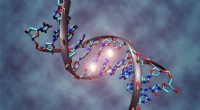
* Evolution is a fact: There is overwhelming evidence from fossils, DNA, and other sources that life has changed over time.
* Natural selection is the primary mechanism of evolution: It is the process by which organisms with advantageous traits are more likely to survive and reproduce.
* Evolution is not a random process: While mutations can introduce new traits, natural selection is a non-random process that favors traits that increase an organism's fitness.
It is important to note that the theory of evolution is a scientific theory, meaning it is a well-supported explanation of a phenomenon that is backed by a large body of evidence. It is not a "belief" or a "hypothesis", but a well-established scientific understanding of how life has changed over time.