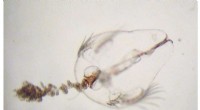
1. Enhancing contrast: Cells are mostly water and have a very similar refractive index to their surroundings. This makes them nearly invisible under a light microscope. Stains add color and contrast, making the cells and their internal structures more visible.
2. Identifying specific structures: Different stains bind to specific cellular components. This allows us to distinguish different parts of the cell, such as:
* Nuclei: Dyes like hematoxylin bind to DNA and stain the nucleus dark blue or purple.
* Cytoplasm: Eosin stains the cytoplasm pink.
* Other structures: Special stains can highlight other components like mitochondria, Golgi apparatus, or specific proteins.
3. Determining cell properties: Some stains can reveal information about the cell's health or activity:
* Gram staining: Differentiates bacteria based on their cell wall composition, helping with identification and treatment.
* Acid-fast staining: Detects bacteria with waxy cell walls, important for diagnosing tuberculosis.
4. Studying cell processes: Some stains can be used to track cellular processes like:
* Fluorescent dyes: Can label specific molecules and follow their movement within the cell.
* Immunostaining: Using antibodies to detect specific proteins within the cell.
In summary, stains are essential tools for studying cells because they enhance contrast, allow for specific structure identification, reveal cell properties, and facilitate the study of cellular processes.