Here's why:
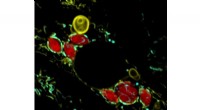
* Eukaryotic cells have a nucleus and other membrane-bound organelles. Examples include animals, plants, fungi, and protists.
* Prokaryotic cells lack a nucleus and other membrane-bound organelles. Examples include bacteria and archaea.
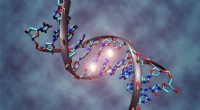
Viruses are much simpler than either eukaryotic or prokaryotic cells. They are acellular, meaning they lack the structures that define a cell. Viruses consist of genetic material (DNA or RNA) enclosed in a protein coat, and sometimes a lipid envelope.
While they require a host cell to replicate, they are not considered alive in the same way as eukaryotic or prokaryotic organisms.





![Shark Attack Trends: Recent Increase After Years of Decline - [Date]](https://www.scienceaq.com/article/uploadfiles/202210/2022102101054361_S.jpg)