Here's a breakdown of what it means:
* Classification: The act of arranging things into groups based on shared characteristics.
* Similar Traits: These are the features that make things alike, such as size, shape, color, function, or origin.
* Groups: These are the categories or sets that are created by the classification process.
Examples of Classification:
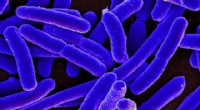
* Biology: Classifying living organisms into kingdoms, phyla, classes, orders, families, genera, and species based on their evolutionary relationships and physical characteristics.
* Library Science: Categorizing books by subject, author, or Dewey Decimal System to make them easier to find.
* Computer Science: Classifying data into categories like images, text, or audio for analysis and processing.
Benefits of Classification:
* Organization: Makes it easier to understand and manage information.
* Understanding: Helps us to identify relationships and patterns between things.
* Communication: Provides a common language for discussing and sharing knowledge.
* Prediction: Allows us to make inferences about things based on their group membership.