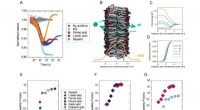
Here's why:
* Fluid: The phospholipid bilayer, the foundation of the cell membrane, is not rigid. The phospholipid molecules can move laterally within the plane of the membrane, like a fluid. This allows for flexibility and adaptability.
* Mosaic: The membrane is not a uniform structure. It contains a variety of components, including proteins, cholesterol, and carbohydrates, embedded within the phospholipid bilayer. These components are distributed throughout the membrane, creating a mosaic-like appearance.
Key features of the fluid mosaic model:
* Phospholipid bilayer: The basic structure, providing a barrier between the cell's interior and exterior.
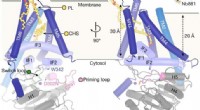
* Proteins: Embedded within the bilayer, they perform various functions like transport, communication, and structural support.
* Cholesterol: Helps maintain the fluidity of the membrane by preventing it from becoming too rigid or too fluid.
* Carbohydrates: Attached to lipids and proteins, they play roles in cell recognition and signaling.
The constant shifting and fluidity of the membrane allow it to:
* Adapt to changes in the environment: The membrane can change its shape and composition in response to stimuli, like temperature fluctuations or changes in the concentration of certain substances.
* Transport molecules: The movement of proteins within the membrane allows for efficient transport of molecules across the membrane.
* Facilitate communication: The movement of proteins allows for the formation of signaling complexes and the transmission of signals across the membrane.
In summary, the fluid mosaic model provides the most accurate description of the cell membrane, emphasizing its dynamic nature and the constant movement of its components.