Here's a breakdown of the theory:
* Endosymbiosis: This refers to a relationship where one organism lives inside another organism.
* The Theory: The Endosymbiotic Theory proposes that ancient eukaryotic cells engulfed prokaryotic cells, which then evolved into mitochondria (for cellular respiration) and chloroplasts (for photosynthesis).
* Evidence: There's a lot of evidence supporting this theory:
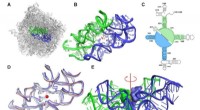
* Similarities in structure: Mitochondria and chloroplasts have their own DNA, ribosomes, and double membranes, similar to prokaryotic cells.
* DNA sequence analysis: The DNA of mitochondria and chloroplasts is more closely related to prokaryotic DNA than eukaryotic DNA.
* Replication: Mitochondria and chloroplasts replicate independently of the eukaryotic cell, similar to how prokaryotes divide.
This theory is widely accepted in the scientific community and is a cornerstone of our understanding of the evolution of eukaryotic cells.