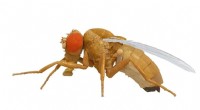
1. Variation: Within any population of organisms, there exists natural variation in traits. This variation arises from mutations in DNA, which are changes in the genetic code. Some mutations are beneficial, some are harmful, and some have no noticeable effect.
2. Inheritance: Organisms inherit their traits from their parents. This means that the variation in traits is passed down from generation to generation.
3. Selection: In any environment, some traits are more advantageous than others. Organisms with these advantageous traits are more likely to survive, reproduce, and pass their traits on to their offspring. This process is called natural selection.
How these principles work together:
* Variation provides the raw material for evolution. Without variation, there would be no traits for natural selection to act upon.
* Inheritance ensures that advantageous traits are passed on to future generations. This allows populations to gradually change over time.
* Selection drives the direction of evolutionary change. The environment determines which traits are beneficial, and thus which organisms are more likely to survive and reproduce.
In summary: Evolution is the process of change in the genetic makeup of a population over time. It is driven by the interplay of variation, inheritance, and selection.
Important points:
* Evolution is a gradual process that occurs over many generations.
* Natural selection is not a conscious force. It simply reflects the differential survival and reproduction of organisms in a given environment.
* Evolution is a scientific theory that is supported by a vast amount of evidence.