Here's a breakdown of what data means in an experiment:
* Observations: The measurements, notes, or any other information recorded during the experiment.
* Measurements: Quantifiable observations, often expressed in numbers, units, or scales.
* Results: The outcomes of the experiment, which are derived from the data.
* Types of data:
* Quantitative data: Numerical data (e.g., weight, temperature, time).
* Qualitative data: Descriptive information (e.g., color, texture, observations of behavior).
* Categorical data: Data that falls into distinct groups (e.g., types of plants, experimental groups).
* Importance of data: Data is crucial for:
* Testing hypotheses: Data allows scientists to see if their predictions are supported by evidence.
* Drawing conclusions: Data helps scientists understand the relationships between variables and draw meaningful conclusions.
* Supporting findings: Data provides evidence to support or refute a scientific claim.
* Sharing knowledge: Data can be shared with the scientific community to advance knowledge and understanding.
Example:
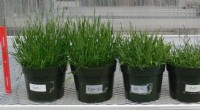
Imagine an experiment testing the effect of fertilizer on plant growth. The data might include:
* Quantitative: Plant height measurements taken every week.
* Qualitative: Observations about the plants' overall health and appearance (e.g., leaf color, stem thickness).
* Categorical: The type of fertilizer used (e.g., organic, synthetic) and the control group (no fertilizer).
By analyzing this data, scientists can determine if the fertilizer has a significant impact on plant growth.
In summary: Data is the heart of any experiment, providing the information needed to test hypotheses, draw conclusions, and share findings with the scientific community.