* All vertebrates, including amphibians, reptiles, mammals, and birds, share a common ancestor. This ancestor lived millions of years ago and was likely a fish.
* Amphibians were the first vertebrates to evolve to live on land. They evolved from lobe-finned fishes.
* Reptiles evolved from amphibians. They developed adaptations for living fully on land, like scales and eggs that could survive out of water.
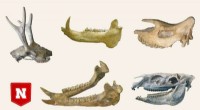
* Mammals evolved from a specific group of reptiles called synapsids. These reptiles had some mammal-like features, like teeth adapted for different functions.
Therefore, it's incorrect to say that amphibians and mammals descended from reptiles. Instead, they both evolved from common ancestors that also gave rise to reptiles.
Think of it like branches on a tree. Amphibians, reptiles, and mammals all branch off from a common trunk, but they don't descend directly from each other.