While both field studies and experiments aim to gather information and answer scientific questions, they differ significantly in their approach and the processes involved. Here's a breakdown:
Field Studies:
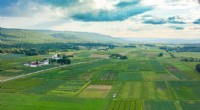
* Focus: Observational, often long-term, studying natural phenomena in their natural environment.
* Processes:
* Observation: Carefully recording data about organisms, ecosystems, or environmental factors in their natural state.
* Sampling: Selecting representative samples to make inferences about the larger population or ecosystem.
* Monitoring: Tracking changes over time, often through repeated observations or data collection.
* Data analysis: Analyzing collected data to identify patterns, trends, and relationships.
* Interpretation: Drawing conclusions and formulating hypotheses based on the observed data.
* Ethical considerations: Respecting the environment and minimizing impact on the study subject.
Experiments:
* Focus: Manipulating variables in a controlled environment to test a specific hypothesis.
* Processes:
* Hypothesis formulation: Defining a testable question and forming a hypothesis that can be tested.
* Experimental design: Carefully planning the experiment, identifying variables, and assigning treatments to groups.
* Control group: Establishing a baseline for comparison by leaving one group unaltered.
* Manipulation: Applying treatments or changes to the experimental group to test the hypothesis.
* Data collection: Gathering data on the response variable in both control and experimental groups.
* Statistical analysis: Analyzing data to determine if the observed differences are statistically significant.
* Conclusion: Drawing conclusions about the validity of the hypothesis based on the results.
Key Differences:
* Control: Field studies rarely have complete control over variables, while experiments focus on controlling variables.
* Environment: Field studies occur in natural settings, while experiments often occur in controlled laboratory settings.
* Scope: Field studies often have a broader scope, studying complex interactions within ecosystems, while experiments are usually more focused on specific questions.
* Time Scale: Field studies can be long-term, spanning years, while experiments often have a shorter duration.
Commonalities:
* Scientific Method: Both rely on the scientific method, involving observation, hypothesis formation, data collection, analysis, and conclusion drawing.
* Objectivity: Both strive for objectivity and minimize bias in their data collection and analysis.
* Replication: Both aim to replicate their studies to ensure reliability and validate results.
* Ethical Considerations: Both are bound by ethical guidelines in conducting research and protecting subjects.
In conclusion:
Field studies and experiments are complementary approaches to scientific inquiry. Field studies provide a natural context for understanding complex systems, while experiments allow for controlled manipulation and testing of specific hypotheses. By integrating these methods, scientists can gain a more comprehensive understanding of the natural world.